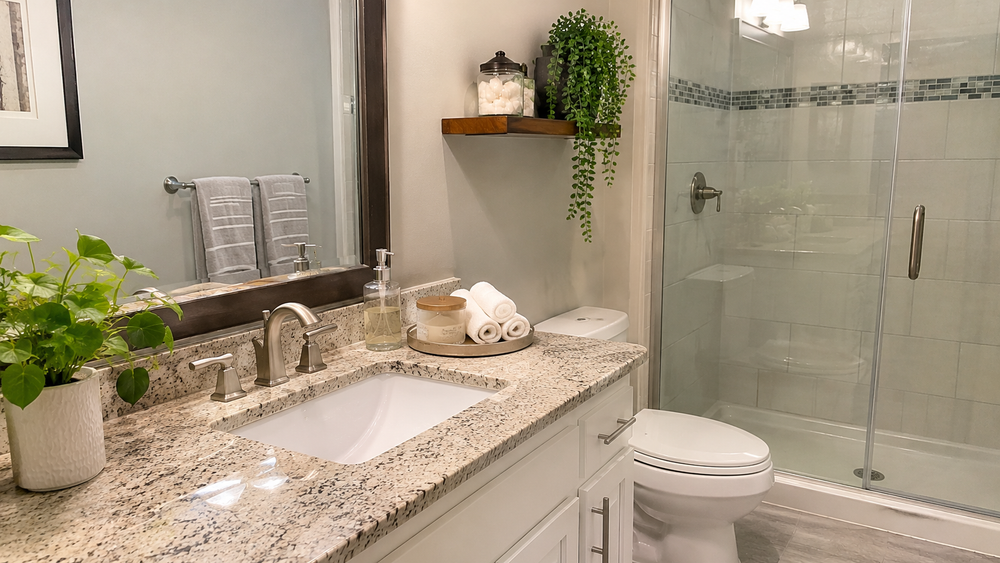
There are two questions homeowners frequently consider when thinking about professional cleaning.
"How often should my house be cleaned?"
And:
"Do I need a deep cleaning, or would regular cleaning be enough?"
The answers aren't always straightforward.
A small home with several people and pets may require more frequent attention than a larger property occupied by one person.
A bathroom used every morning may have different cleaning needs from a second bathroom that is rarely used.
And a house that has been maintained consistently is in a very different condition from one that hasn't received detailed attention for several months.
As November comes to an end and December approaches, it's a good opportunity to understand these differences before deciding what kind of cleaning your home needs.
Here are seven questions worth asking.
1. When Was the Last Thorough Cleaning?
Start by thinking about when the house last received detailed attention beyond everyday maintenance.
Perhaps the floors and countertops are cleaned regularly, but the accessible baseboards, cabinet fronts, and other less frequently addressed surfaces haven't been cleaned in some time.
That doesn't automatically mean the entire house needs intensive cleaning.
It may mean that certain areas deserve additional attention.
A more detailed cleaning visit can be useful when ordinary maintenance hasn't addressed accumulated residue.
But the condition of the actual surfaces matters more than how many weeks have passed.
A home that has been maintained consistently may need very little additional work.
2. Which Rooms Are Actually Used Every Day?
Consider a family home in Viera.
The kitchen is used several times a day.
The primary bathroom is part of everyone's morning routine.
The living room is where the family spends most evenings.
Meanwhile, a guest bedroom may remain unused for several weeks.
Would it make sense to give every room identical attention during every cleaning appointment?
Not necessarily.
Cleaning priorities should reflect how frequently spaces are used, the condition of their surfaces, and the needs of the household.
An often-used kitchen might require more frequent maintenance than a lightly used bedroom.
A home office may need careful dusting around accessible furniture while leaving important documents and electronic equipment undisturbed.
Understanding room usage helps avoid spending time on tasks that provide little immediate benefit.
3. Are You Seeing Ordinary Dust or Persistent Buildup?
There's an important difference between light surface dust and residue that has accumulated over a longer period.
Light dust on accessible furniture can often be addressed through routine maintenance.
Persistent soap residue around bathroom fixtures, grease buildup near cooking areas, or grime along frequently touched cabinet surfaces may require more detailed work.
Different materials also require different methods.
Natural stone, painted cabinetry, certain types of flooring, and delicate finishes may be damaged by inappropriate cleaning products.
The goal isn't simply to use stronger chemicals.
It's to choose suitable methods for the surface and type of residue.
When a surface has unusual staining or damage, it may require specialized assessment rather than ordinary cleaning.
4. Are Pets Part of the Household?
Pets can change how a home needs to be maintained.
Hair may collect along furniture edges, beneath accessible seating, or in areas where animals frequently rest.
Paw prints may appear near entrances.
Food and water bowls can create small cleaning needs of their own.
Some households benefit from more frequent vacuuming or floor maintenance because of these everyday activities.
Others may have very little additional cleaning to manage.
It's worth mentioning pets when discussing a professional cleaning appointment.
That allows expectations around accessible areas, pet safety, and the cleaning products being used to be considered beforehand.
Professional cleaners should also know whether animals will be present during the visit and whether special access arrangements are required.
5. Do You Want the Entire House Cleaned or Just Certain Areas?
This is one of the most useful questions a homeowner can ask.
Imagine that your living room and bedrooms are already in good condition.
However, the kitchen needs more attention, and the bathrooms have accumulated some residue that ordinary maintenance hasn't addressed.
Does that automatically justify an intensive cleaning of the entire property?
Not always.
Depending on the services available, it may be more practical to discuss specific priorities.
Some providers offer different service levels, while others work from a defined checklist with optional tasks.
There is no universal definition of what every cleaning company includes in a "deep clean."
Before booking, ask for a clear explanation of what is included, what is excluded, and whether any additional services are available.
This helps prevent misunderstandings and makes it easier to compare options.
6. How Much Time Has the Home Been Empty?
Not every home in the Melbourne area is occupied in the same way.
Some households have people coming and going throughout the day.
Others are used only periodically.
A lightly occupied home may have less cooking residue and foot traffic, but ordinary dust can still settle on surfaces.
An empty property may also require attention to unexpected maintenance concerns before cleaning begins.
If there are signs of persistent moisture, leaks, or mold-like growth, those issues need appropriate evaluation.
Cleaning visible residue does not necessarily address the cause.
A property that has been unoccupied for a period of time should be assessed according to its condition rather than automatically assigned the most intensive cleaning option.
7. What Would Make Your Everyday Routine Easier?
This final question is often more helpful than asking how perfect the house can look.
Perhaps keeping bathrooms maintained is the biggest challenge.
Maybe floors require frequent attention because the family spends so much time moving between indoor and outdoor areas.
Or perhaps the kitchen is where most of the household's cleaning effort goes.
The most valuable cleaning plan is one that addresses the tasks that are difficult to keep up with consistently.
That may mean considering recurring maintenance.
It may mean arranging a more detailed cleaning when appropriate.
Or it may mean making a few changes to the household's everyday habits.
There isn't one schedule that works equally well for every family.
Choosing a Cleaning Service in Melbourne, Florida
Before hiring a residential cleaning company, consider asking these practical questions:
Which rooms and surfaces are included in the quoted service?
Are detailed tasks available, and do they require an additional charge?
Are cleaning supplies provided?
Are there any surfaces or materials the homeowner should identify in advance?
What access arrangements are necessary?
How should pets, personal belongings, and delicate items be handled?
Is the service intended for routine maintenance or a more intensive cleaning?
Clear communication helps both homeowners and cleaning professionals understand the expected result.
At Bela Sol Services LLC, the focus is on the value of caring for residential spaces throughout the Melbourne community.
Before arranging a cleaning appointment, homeowners should discuss their priorities and confirm the tasks included in the proposed service.
The right cleaning plan begins with understanding the home, not simply choosing the longest checklist.
A Comfortable Home Is the Real Goal
As December approaches, many families begin thinking about everything they want to finish before the end of the year.
But maintaining a comfortable home doesn't have to become another overwhelming project.
Not every room needs the same attention.
Not every household needs the same schedule.
And not every home requires a deep cleaning simply because the calendar is changing.
What matters is recognizing the needs of the space and creating a practical plan for caring for it.
A well-maintained home isn't measured by how many tasks are completed in a single day. It's measured by how comfortably it supports everyday life.